How MetaV8Solutions is leveraging artificial intelligence to build smarter, faster, and more adaptive websites for the modern digital landscape
Let me start with a confession.
Three years ago, if you had told me that artificial intelligence would fundamentally change how we build websites, I probably would have nodded politely while secretly thinking you were exaggerating. Sure, AI was making waves in other industries. Self-driving cars. Medical diagnosis. Voice assistants that could order pizza for you. But web development? That felt different. More… human. More creative. The kind of work that machines couldn’t really touch.
I was wrong. Really, really wrong.
Today, as I write this from the MetaV8Solutions office, surrounded by a team that has spent countless hours learning, experimenting, and implementing AI-powered solutions, I can tell you without hesitation: artificial intelligence isn’t just changing web development. It’s revolutionizing it in ways that would have seemed like science fiction just a few years ago.
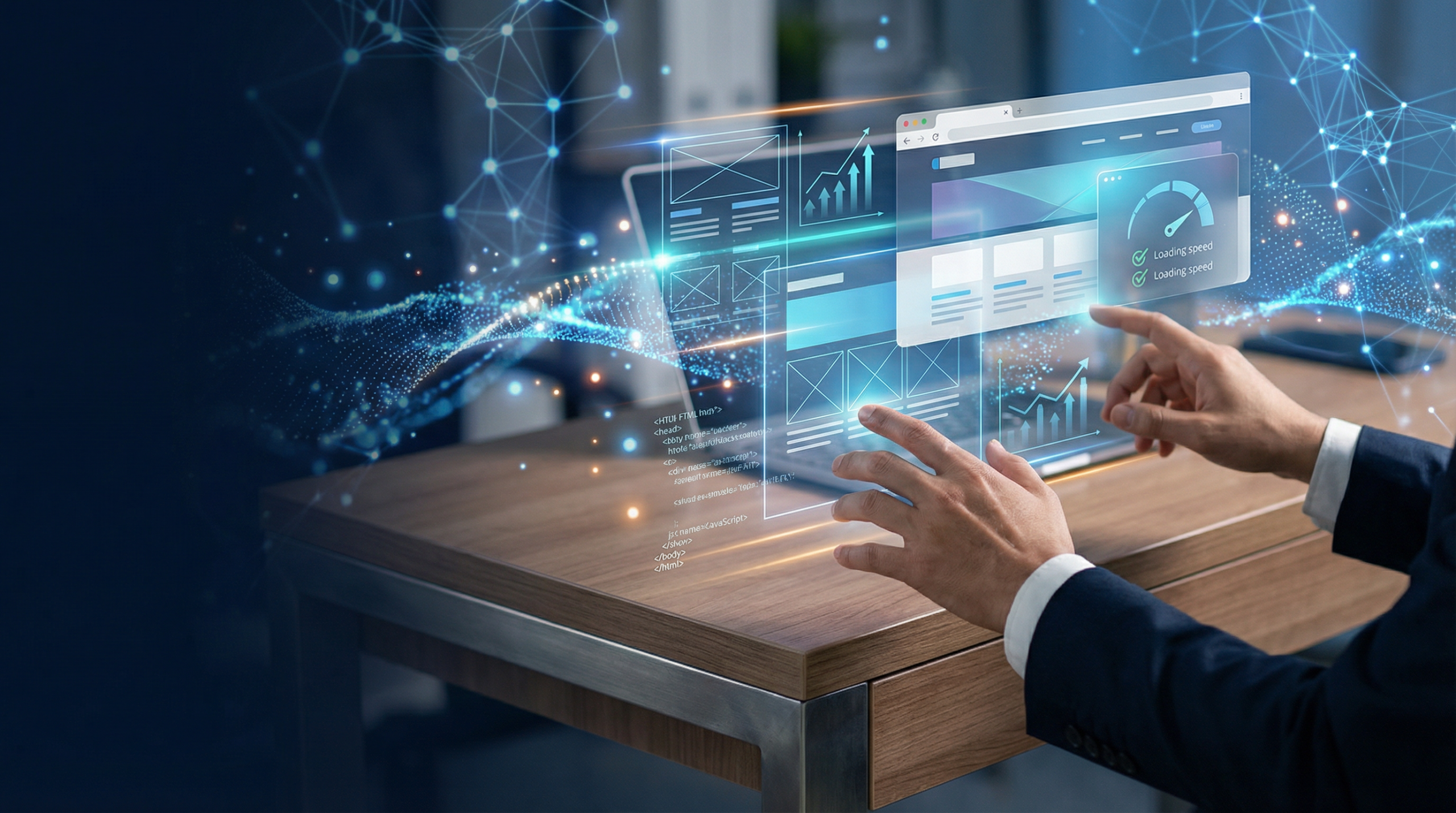
And here’s the thing — this isn’t some distant future we’re talking about. This is happening right now. Every single day. Automated code generation tools are writing clean, functional code faster than any human developer could. AI-driven optimization engines are analyzing website performance in real-time, making adjustments on the fly that would have taken teams of developers weeks to implement manually. Dynamic personalization systems are creating unique, tailored experiences for every single visitor to a website.
The question isn’t whether AI will transform the web development industry. The question is whether your business is ready to take advantage of it.
In this comprehensive guide, we’re going to dive deep into the world of AI-powered web development and real-time site optimization. We’ll explore the technologies driving this revolution, examine real-world applications, and share our perspective on how businesses can leverage these capabilities to gain a competitive edge. Whether you’re a business owner trying to understand what’s possible, a marketing professional looking to improve your digital presence, or simply curious about where web development is headed, this post is for you.
Let’s get into it.
Part 1: Understanding the AI Revolution in Web Development
The Shift That Changed Everything
To really appreciate where we are today, it helps to understand where we’ve been.
For decades, web development followed a fairly predictable pattern. You had designers who created mockups. Developers who wrote code. Quality assurance teams who tested everything. And project managers who tried to keep it all on track and on budget. It was a labor-intensive process that required specialized skills, significant time investments, and — let’s be honest — a lot of patience.
The process worked. Millions of websites were built this way. But it was also inherently limited. Every change required human intervention. Every optimization needed manual analysis. Every personalization effort demanded careful planning and implementation. Scaling was expensive. Iteration was slow.
Then AI started to change things.
It didn’t happen overnight. These things rarely do. First, we saw simple automation tools that could handle repetitive tasks. Then came more sophisticated systems that could analyze data and make recommendations. Eventually, we arrived at where we are today: AI systems that can generate code, optimize performance, and personalize experiences with minimal human oversight.
The implications are profound. What once took weeks can now take hours. What once required a team can now be accomplished with a fraction of the resources. And perhaps most importantly, what once was static and unchanging can now be dynamic, adaptive, and continuously improving.
Why This Matters for Your Business
I know what some of you might be thinking: “This sounds impressive, but what does it actually mean for my business?”
It’s a fair question. And the answer is simpler than you might expect.
AI-powered web development means you can have a website that:
- Loads faster because AI optimization tools are constantly analyzing and improving performance
- Ranks higher because AI-driven SEO tools identify and fix issues in real-time
- Converts better because dynamic personalization ensures every visitor sees content tailored to their needs
- Costs less to maintain because automated systems handle much of the ongoing optimization work
- Stays competitive because AI tools are constantly learning and adapting to changing best practices
In other words, it means a better website. A more effective website. A website that actually works for your business instead of just existing on the internet.
At MetaV8Solutions, we’ve seen firsthand what happens when businesses embrace these technologies. Conversion rates climb. Bounce rates drop. Customer satisfaction improves. And the businesses themselves grow.
That’s not hype. That’s what happens when you combine cutting-edge technology with strategic implementation.
Part 2: Automated Code Generation — The Developer’s New Best Friend
What Exactly Is Automated Code Generation?
Let’s start with the basics.
Automated code generation refers to the use of AI systems to write code. These systems can range from simple autocomplete tools that suggest the next few characters of code to sophisticated platforms that can generate entire components, pages, or even applications based on natural language descriptions.
If you’ve heard of GitHub Copilot, ChatGPT, or similar tools, you’ve heard of automated code generation. These AI assistants can look at what a developer is trying to accomplish and suggest code that achieves that goal. They can write functions, debug errors, translate code between programming languages, and much more.
But here’s where it gets really interesting for web development specifically.
Modern AI code generation tools aren’t just writing generic code. They’re learning from millions of websites, understanding best practices for performance and accessibility, and generating code that follows current industry standards. They know about responsive design. They understand SEO requirements. They can implement security best practices automatically.
This doesn’t mean developers are obsolete. Far from it. But it does mean that developers can work faster, more efficiently, and focus their energy on the creative and strategic aspects of web development rather than getting bogged down in repetitive coding tasks.
How We Use Automated Code Generation at MetaV8Solutions
At MetaV8Solutions, we’ve integrated AI code generation tools into our development workflow in several key ways.
First, for rapid prototyping. When a client comes to us with an idea, we can now create functional prototypes in a fraction of the time it used to take. AI tools help us generate initial code structures, allowing our developers to focus on customization and refinement rather than starting from scratch every time.
Second, for code quality. AI assistants don’t just write code — they write clean, well-structured, maintainable code. They follow best practices, add appropriate comments, and structure things in ways that make future modifications easier. This means better results for our clients and fewer headaches down the road.
Third, for accessibility and compliance. Modern AI tools are trained on accessibility guidelines and compliance requirements. They can automatically generate code that meets WCAG standards, includes proper ARIA labels, and follows other accessibility best practices. This isn’t just good ethics — it’s good business. Accessible websites reach more people and avoid legal complications.
Fourth, for performance optimization. AI code generation tools understand the importance of website performance. They can generate code that loads faster, uses resources more efficiently, and follows Core Web Vitals best practices right out of the gate.
The result? Faster development cycles, higher-quality code, and better outcomes for our clients.
The Human Element Remains Essential
I want to be clear about something here, because I think there’s a lot of misunderstanding around AI and code generation.
AI tools are incredibly powerful. But they’re not magic. And they’re not replacements for human expertise.
What they are is force multipliers. They make good developers better. They allow experienced professionals to accomplish more in less time. They handle the routine so that humans can focus on the exceptional.
At MetaV8Solutions, every piece of AI-generated code is reviewed by our experienced developers. They check for edge cases the AI might have missed. They ensure the code fits within the broader architecture of the project. They add the nuanced customizations that make each website unique.
This human-AI collaboration is, in our opinion, the ideal approach. It combines the speed and efficiency of artificial intelligence with the creativity, judgment, and experience of human professionals.
Part 3: AI-Driven Site Optimization — Making Websites Better Automatically
The Traditional Optimization Problem
Here’s a scenario that will sound familiar to anyone who’s worked on a website.
You launch a new site. It looks great. Everything seems to be working. Then, over time, problems start to emerge. Page load speeds creep up. Mobile users report issues. Search rankings slip. Conversion rates decline.
Sound familiar?
The traditional approach to these problems is reactive. You notice something is wrong, investigate the cause, implement a fix, and hope it works. It’s a constant game of whack-a-mole, where you’re always responding to problems after they’ve already affected your users and your business.
AI-driven optimization takes a fundamentally different approach. Instead of waiting for problems to emerge, AI systems continuously monitor, analyze, and optimize your website. They identify issues before they become major problems. They make adjustments automatically, in real-time. They learn from data and improve over time.
It’s the difference between fixing your car after it breaks down and having a diagnostic system that identifies and addresses issues before they leave you stranded on the side of the road.
The Key Areas of AI-Driven Optimization
AI optimization touches virtually every aspect of website performance. Let’s look at some of the most important areas.
Performance Optimization
Website speed matters. Studies consistently show that slower websites have higher bounce rates, lower conversion rates, and worse search rankings. Users expect pages to load quickly, and they have little patience for sites that don’t.
AI-driven performance optimization addresses this in several ways:
Image optimization. AI tools can analyze images on your website and automatically optimize them for size, format, and quality. They can implement lazy loading, serve different image sizes based on device capabilities, and convert images to more efficient formats like WebP — all automatically.
Code minification and bundling. AI systems can analyze your website’s code and automatically minify it, removing unnecessary characters and whitespace. They can also bundle files efficiently, reducing the number of HTTP requests required to load a page.
Caching strategies. AI can determine optimal caching strategies based on how your content is used, ensuring that frequently accessed resources are served quickly while less common resources are handled appropriately.
Resource prioritization. Modern AI optimization tools understand which resources are critical for initial page rendering and can prioritize their loading accordingly. This improves perceived performance even when total load times remain constant.
Server optimization. AI systems can analyze server performance and make recommendations for configuration changes, scaling decisions, and resource allocation.
At MetaV8Solutions, we implement AI-driven performance optimization for all our clients because we’ve seen the tangible impact it has on business results.
SEO Optimization
Search engine optimization is another area where AI is making a significant impact.
Traditional SEO involves a lot of manual work: keyword research, content optimization, link building, technical audits. It’s time-consuming, requires specialized expertise, and needs constant attention as search engine algorithms evolve.
AI-powered SEO tools are changing this equation. These systems can:
Analyze competitor rankings and identify opportunities for improvement. They can see what’s working for sites in your industry and suggest strategies based on that analysis.
Identify technical SEO issues automatically. Broken links, duplicate content, missing meta descriptions, poor mobile optimization — AI tools can scan your entire website and flag these issues before they hurt your rankings.
Suggest content optimizations based on search intent and user behavior. AI can analyze what users are actually searching for and help ensure your content meets their needs.
Monitor ranking changes and alert you to significant shifts. Rather than manually checking rankings, AI systems can track your position for important keywords and notify you when changes occur.
Adapt to algorithm updates by analyzing ranking shifts across the web and adjusting recommendations accordingly.
This doesn’t mean you don’t need SEO expertise. You absolutely do. But AI tools allow that expertise to be applied more efficiently and effectively.
User Experience Optimization
Perhaps the most exciting area of AI-driven optimization is user experience. This is where AI really shines, because user experience is inherently data-driven and highly variable.
AI can analyze how users actually interact with your website:
- Which pages they visit
- How long they stay
- Where they click
- Where they scroll
- When they leave
- What devices they use
- What paths they take through your site
With this data, AI systems can identify patterns and problems that would be invisible to human analysts. They can spot areas where users consistently get stuck, pages that drive people away, and elements that attract attention.
But AI goes beyond analysis. Advanced systems can actually implement changes based on what they learn. They can adjust layouts, modify navigation, change content placement, and test different approaches — all automatically, all in real-time.
At MetaV8Solutions, we call this “continuous optimization,” and it represents a fundamental shift from the traditional approach of periodic redesigns. Instead of overhauling your website every few years, your site is constantly evolving, constantly improving, constantly adapting to what actually works.
Real-Time Optimization: What It Actually Means
I’ve used the phrase “real-time” several times, so let me explain what that actually means in practice.
Real-time optimization refers to the ability of AI systems to make changes to a website while users are actually using it. Not overnight. Not weekly. Literally in real-time.
This might sound scary to some people. The idea of an AI making changes to your live website without human approval can feel risky. And honestly, there are situations where caution is warranted.
But when implemented properly, real-time optimization is incredibly powerful. Here’s how it typically works:
- AI systems continuously monitor user behavior, performance metrics, and other relevant data.
- Algorithms analyze this data and identify opportunities for improvement.
- The system implements small, reversible changes based on its analysis.
- Performance is measured against key metrics to determine if the change was beneficial.
- Successful changes are retained, while unsuccessful ones are reversed.
- The system learns from each experiment and becomes more effective over time.
The key is that changes are small, reversible, and data-driven. The AI isn’t making sweeping changes to your brand or messaging. It’s making incremental adjustments — button colors, layout tweaks, content placement — based on what the data shows actually works.
Over time, these small improvements compound. What starts as a 1% improvement here and a 2% improvement there eventually adds up to significant, measurable gains.
Part 4: Dynamic Personalization — Creating Unique Experiences for Every Visitor
The End of One-Size-Fits-All
Think about the last time you visited a website. Any website.
If it was a static site without personalization, you saw exactly the same thing as every other visitor. The same homepage. The same product recommendations. The same calls to action. The same content, regardless of who you are, what you’re interested in, or what you’re trying to accomplish.
Now think about how different you are from other visitors to that same site. You might be a first-time visitor while someone else is a loyal customer. You might be researching a major purchase while someone else is just browsing. You might be a technical expert while someone else is a complete beginner.
Does it really make sense for everyone to see exactly the same thing?
Dynamic personalization says no. And AI makes it possible to do something about it.
How Dynamic Personalization Works
Dynamic personalization uses AI to analyze visitor behavior and characteristics, then adjusts the website experience accordingly. This can include:
Content personalization. Different visitors see different content based on their interests, behavior, or characteristics. A visitor who has previously shown interest in a particular product category might see more content related to that category. A returning customer might see different messaging than a first-time visitor.
Layout personalization. The actual structure of pages can change based on what’s most likely to be relevant to each visitor. If data shows that a particular visitor is most likely to engage with video content, videos might be more prominently displayed. If another visitor typically reads long-form text, that format might be prioritized.
Product recommendations. This is probably the most familiar form of personalization. “Customers who bought X also bought Y.” These recommendation engines use AI to analyze purchase patterns and suggest relevant products. When done well, they can significantly increase average order values and customer satisfaction.
Timing personalization. AI can optimize when certain elements appear. Pop-ups, offers, and calls to action can be triggered at moments when visitors are most likely to be receptive, based on analysis of user behavior patterns.
Copy personalization. Even the text on a website can be personalized. Headlines, calls to action, product descriptions — AI can adjust language based on what’s most likely to resonate with each visitor.
The Technology Behind Personalization
Dynamic personalization relies on several interconnected technologies:
Data collection. To personalize experiences, you need data about your visitors. This includes behavioral data (what they do on your site), contextual data (where they came from, what device they’re using), and sometimes demographic or psychographic data.
Machine learning algorithms. These algorithms analyze the collected data and identify patterns. They learn which types of visitors respond best to which types of content, layouts, or offers.
Real-time processing. Personalization needs to happen fast. Visitors won’t wait around while your system figures out what to show them. This requires real-time data processing capabilities.
Content management. You need a system that can serve different content to different users. This might be a headless CMS, a personalization platform, or custom-built infrastructure.
Testing and optimization. Personalization isn’t set-and-forget. It requires ongoing testing to ensure that personalized experiences actually outperform generic ones.
The Privacy Question
I’d be remiss if I didn’t address the elephant in the room: privacy.
Personalization depends on data collection. And in an era of increasing privacy awareness, GDPR, CCPA, and similar regulations, data collection is a sensitive topic.
At MetaV8Solutions, we take privacy seriously. Really seriously. We believe that personalization and privacy can coexist — but it requires thoughtfulness and care.
Here’s our approach:
Transparency. We believe visitors should know what data is being collected and how it’s being used. Clear privacy policies and consent mechanisms aren’t just legal requirements — they’re ethical obligations.
Minimal data collection. We collect only the data that’s actually needed for personalization. There’s no point in gathering information you’re never going to use.
Secure data handling. All collected data is stored and transmitted securely. We implement industry-standard security practices and regularly audit our systems.
User control. Visitors should have the ability to opt out of personalization if they prefer a generic experience. This is both a legal requirement in many jurisdictions and simply good practice.
First-party focus. We prioritize first-party data (data collected directly from your website) over third-party data (data purchased from external sources). This is more privacy-friendly and increasingly necessary as third-party cookies are phased out.
Personalization done right respects user privacy while still delivering better experiences. It’s not about surveillance — it’s about relevance.
The Business Impact of Personalization
So what does all this actually accomplish? What’s the business case for investing in dynamic personalization?
The research is pretty clear.
Studies consistently show that personalized experiences outperform generic ones. Personalized emails have higher open rates. Personalized product recommendations drive more purchases. Personalized content keeps visitors engaged longer.
Some specific findings:
- 80% of consumers are more likely to make a purchase from brands that offer personalized experiences
- Personalized calls to action perform 202% better than default versions
- Companies that excel at personalization generate 40% more revenue than average performers
- 74% of customers feel frustrated when website content is not personalized
These aren’t small differences. This is the kind of performance improvement that can fundamentally transform business results.
At MetaV8Solutions, we’ve seen these benefits firsthand with our clients. E-commerce sites see higher conversion rates and average order values. Lead generation sites see more qualified inquiries. Content sites see longer session durations and more page views.
Personalization works. And AI makes it possible to implement at scale.
Part 5: The AI-Human Partnership in Web Development
Why AI Won’t Replace Web Developers (But Will Change How They Work)
Let’s address something that comes up in almost every conversation about AI and web development: job displacement.
Will AI replace web developers? Will designers become obsolete? Is the entire industry about to be automated away?
I don’t think so. But I do think the nature of the work will change — and in many ways, for the better.
Here’s my perspective, based on our experience at MetaV8Solutions.
AI is exceptionally good at certain things: pattern recognition, repetitive tasks, data analysis, optimization within defined parameters. These are things that, frankly, many developers find tedious. Writing boilerplate code. Testing for bugs. Optimizing image sizes. Checking for accessibility compliance.
AI is less good at other things: understanding context, making creative decisions, grasping nuance, adapting to novel situations, understanding human emotions and preferences. These are things that require human insight, experience, and judgment.
The most effective approach combines both. Let AI handle what AI does well. Let humans focus on what humans do well. The result is better than either could achieve alone.
In practical terms, this means:
Developers become more strategic. Instead of spending time on repetitive coding tasks, developers can focus on architecture, user experience, creative problem-solving, and client relationships. The work becomes more interesting and more impactful.
Designers become more experimental. AI can rapidly prototype design variations, freeing designers to explore more options and push creative boundaries. Instead of spending hours on production work, designers can focus on innovation.
Strategists become more data-informed. AI provides deeper insights into user behavior, competitive landscapes, and performance metrics. This enables better strategic decisions based on actual data rather than assumptions.
Quality increases across the board. When AI handles the routine and humans focus on the exceptional, the overall quality of work improves. Fewer bugs. Better performance. More creative solutions.
At MetaV8Solutions, we’ve embraced this partnership. Our team includes talented human developers, designers, and strategists — and they’re equipped with powerful AI tools that amplify their capabilities. The combination is more effective than either element alone.
Building an AI-Enhanced Development Workflow
For agencies and development teams looking to integrate AI into their workflows, here’s what we’ve learned.
Start with specific use cases. Don’t try to AI-ify everything at once. Identify specific tasks where AI can add value — code generation, performance optimization, content personalization — and start there. Build expertise and confidence before expanding.
Invest in training. AI tools are only as good as the people using them. Team members need to understand how these tools work, what their limitations are, and how to integrate them effectively into existing workflows.
Establish quality controls. AI output needs human review. Establish clear processes for reviewing AI-generated code, validating AI recommendations, and ensuring quality standards are maintained.
Measure results. Track the impact of AI integration on productivity, quality, and client outcomes. This data helps you refine your approach and demonstrate value.
Stay current. The AI landscape is evolving rapidly. What’s cutting-edge today may be outdated in six months. Build a culture of continuous learning and adaptation.
Maintain human oversight. AI systems can make mistakes. They can have biases. They can miss context that humans would catch. Maintain human oversight to catch and correct these issues.
This isn’t always easy. Integrating AI into established workflows requires investment, adjustment, and sometimes uncomfortable change. But the benefits are worth it.
Part 6: What This Means for Businesses
The New Competitive Landscape
If you’re a business owner or marketing professional reading this, you might be wondering what all this means for you specifically.
Here’s the honest truth: AI-powered web development is becoming a competitive differentiator. Businesses that embrace these technologies will have faster, better-performing, more personalized websites. Those that don’t will fall behind.
This isn’t about technology for technology’s sake. It’s about business results.
A website that loads faster keeps more visitors engaged. A website that personalizes content converts more prospects into customers. A website that optimizes itself continuously improves over time rather than gradually degrading.
These differences compound. Over months and years, the gap between AI-enhanced websites and traditional websites grows wider. The businesses with better digital experiences attract more customers, generate more revenue, and have more resources to invest in further improvements. It’s a virtuous cycle.
The good news? You don’t need to be a technology company to benefit from these capabilities. You don’t need an in-house AI team or massive technical resources. You just need the right partner.
Choosing the Right Web Development Partner
Speaking of partners — how do you choose a web development agency in this new AI-enhanced landscape?
Here are some things to look for:
AI expertise and experience. Not every agency has embraced AI. Ask potential partners about their experience with AI-powered tools and approaches. Look for specific examples and case studies, not just vague claims.
Human talent. AI tools are only as good as the humans using them. Look for agencies with talented, experienced teams who can leverage AI effectively while providing the strategic insight and creative vision that AI can’t.
Transparent processes. Understand how the agency works. How do they integrate AI into their development process? What human oversight exists? How do they ensure quality?
Focus on results. The goal isn’t to use AI for its own sake — it’s to achieve better business outcomes. Look for partners who are focused on measurable results, not just impressive-sounding technology.
Commitment to continuous improvement. AI-powered optimization isn’t a one-time thing. Look for partners who are committed to ongoing improvement and optimization, not just launch-and-leave.
Ethical approach. AI raises ethical questions around privacy, transparency, and fairness. Look for partners who take these issues seriously and have thoughtful policies in place.
At MetaV8Solutions, we believe we check all these boxes. But honestly, the most important thing is finding a partner who understands your business, shares your values, and is committed to helping you succeed. The specific technologies matter less than the quality of the partnership.
The Investment Question
Let’s talk about money.
AI-powered web development might sound expensive. Advanced technology. Sophisticated algorithms. Continuous optimization. Surely this must cost more than traditional approaches?
The answer is: it depends.
Yes, building an AI-enhanced website typically requires more upfront investment than throwing together a basic site with a template. The technology is sophisticated, and implementing it properly requires expertise.
But here’s what that analysis misses: total cost of ownership.
Traditional websites require ongoing manual maintenance. Someone needs to monitor performance, fix issues, update content, optimize for search engines, test new approaches. All of this costs money — either in employee time or agency retainers.
AI-enhanced websites automate much of this work. Performance optimization happens automatically. Issues are identified and addressed before they become problems. Personalization adapts based on data without manual intervention.
Over time, this adds up. The website that seemed more expensive upfront often proves more economical over its lifetime.
And then there’s the revenue side. A better-performing website generates more business. Higher conversion rates. Better search rankings. More engaged visitors. These improvements directly impact the bottom line.
When you factor in both reduced maintenance costs and increased revenue, AI-powered web development often delivers a strong return on investment. Not always — every situation is different — but often.
The key is to think long-term. A website isn’t a one-time expense; it’s an ongoing business asset. Investing in AI capabilities can make that asset more valuable over time.
Part 7: The MetaV8Solutions Approach
Our Philosophy
At MetaV8Solutions, we’ve thought carefully about how to integrate AI into our work. We’ve experimented, learned, adjusted, and refined our approach over time.
The result is what we call “intelligent web development” — an approach that combines the best of AI technology with human expertise, strategic thinking, and genuine care for our clients’ success.
Here’s what that means in practice:
Technology serves strategy, not the other way around. We don’t use AI because it’s cool or impressive. We use it because it helps us achieve better results for our clients. Every technology decision starts with the question: “How does this serve the client’s goals?”
Human creativity drives the work. AI is a tool, not a replacement for human insight. Our team brings creativity, strategic thinking, and understanding of human psychology that AI cannot replicate. We use AI to amplify these human capabilities, not replace them.
Continuous improvement is built in. We don’t just build websites and walk away. Our AI-powered optimization approach ensures that sites continue to improve over time, adapting to changing conditions and learning from real-world data.
Transparency is non-negotiable. We believe clients should understand what we’re doing and why. We explain our use of AI, share our reasoning, and ensure clients are comfortable with our approach.
Ethics matter. We take privacy, accessibility, and fairness seriously. Our AI implementations are designed to respect user privacy, ensure equitable access, and avoid harmful biases.
Our Services
Let me give you a concrete sense of what we actually do.
AI-Enhanced Website Development. We build custom websites that leverage AI technologies throughout the development process. This includes AI-assisted code generation for faster development, built-in optimization capabilities, and infrastructure that supports ongoing AI-driven improvements.
Real-Time Performance Optimization. We implement AI systems that continuously monitor and optimize website performance. This includes automated image optimization, code optimization, caching strategies, and Core Web Vitals improvements — all happening in real-time without manual intervention.
Dynamic Personalization Implementation. We help clients implement personalization strategies that create unique experiences for different visitors. This includes setting up the technical infrastructure, defining personalization rules, integrating with data sources, and establishing measurement frameworks.
AI-Driven SEO Optimization. We leverage AI tools to improve search visibility through technical optimization, content analysis, competitive intelligence, and ongoing monitoring. Our approach combines AI capabilities with human SEO expertise for optimal results.
Conversion Rate Optimization. We use AI-powered testing and analysis to continuously improve conversion rates. This includes A/B testing, multivariate testing, user behavior analysis, and automated optimization based on performance data.
Ongoing Support and Optimization. We don’t disappear after launch. Our ongoing support packages include continuous AI-driven optimization, regular performance reviews, and proactive improvements to keep sites performing at their best.
Our Process
How does a project with MetaV8Solutions typically unfold? Here’s a high-level overview:
Discovery. We start by understanding your business, goals, audience, and competitive landscape. This isn’t just a formality — it’s essential for ensuring that technology decisions serve business objectives.
Strategy. Based on discovery insights, we develop a comprehensive strategy. This includes defining personalization approaches, identifying optimization opportunities, and establishing success metrics.
Design. Our designers create visual concepts that align with your brand while optimizing for user experience. AI tools help us rapidly prototype and test different approaches.
Development. Our developers bring designs to life using AI-enhanced development workflows. This includes leveraging code generation tools, implementing optimization capabilities, and building personalization infrastructure.
Testing. Before launch, we thoroughly test everything. This includes functional testing, performance testing, accessibility testing, and cross-device compatibility testing.
Launch. We deploy your new website with care, ensuring a smooth transition and minimal disruption.
Optimization. After launch, AI-driven optimization begins. Systems continuously monitor performance, analyze user behavior, and implement improvements.
Reporting. We provide regular reports on performance, optimization activities, and results. You always know how your website is performing and what we’re doing to improve it.
This process typically takes several weeks to several months, depending on project scope. But the result is a website that’s not just launched — it’s continuously evolving.
Part 8: Looking Ahead — The Future of AI in Web Development
Trends to Watch
The AI landscape is evolving rapidly. What’s cutting-edge today may be standard practice tomorrow. Here are some trends we’re watching closely:
Generative AI for content creation. AI systems are becoming increasingly capable of generating text, images, and even video content. While this raises important questions about authenticity and quality, it also creates opportunities for more dynamic, personalized content experiences.
Voice and conversational interfaces. As voice assistants become more sophisticated, websites will need to adapt. AI will enable more natural conversational interactions, moving beyond traditional point-and-click interfaces.
Predictive personalization. Current personalization systems largely react to past behavior. Future systems will predict future needs and preferences, proactively serving content before visitors even know they want it.
Autonomous optimization. Today’s AI optimization systems still require significant human oversight. Future systems will become more autonomous, making more sophisticated decisions with less human intervention.
Edge computing for real-time processing. Processing AI algorithms at the network edge (closer to users) will enable even faster real-time optimization, with near-instantaneous personalization and adaptation.
Multimodal AI. AI systems that can process and generate multiple types of content — text, images, audio, video — simultaneously will enable more integrated, coherent digital experiences.
Ethical AI frameworks. As AI becomes more prevalent, we expect to see more robust frameworks for ensuring AI systems are fair, transparent, and respectful of user privacy.
Preparing for What’s Coming
How can businesses prepare for this AI-enhanced future? Here are some suggestions:
Invest in data infrastructure. AI is only as good as the data it learns from. Building robust data collection and management capabilities now will pay dividends as AI capabilities expand.
Build organizational AI literacy. Ensure your team understands AI basics — what it can do, what it can’t, and how to work with it effectively. This doesn’t require deep technical expertise, just baseline familiarity.
Start experimenting. Don’t wait for AI to be “ready.” Start experimenting with available tools and approaches now. The learning you gain will be valuable as capabilities expand.
Choose flexible partners. Work with technology and agency partners who are committed to staying current with AI developments. The landscape is changing fast, and you need partners who can adapt.
Stay informed. Keep up with developments in AI and web technology. Follow industry publications, attend conferences, engage with thought leaders.
Think long-term. AI investments often take time to pay off. Think in terms of years, not months. Build sustainable capabilities rather than chasing short-term trends.
The future is coming faster than most people expect. But with the right preparation, it’s an opportunity, not a threat.
Part 9: Real-World Applications and Examples
E-Commerce: Personalized Shopping Experiences
Let me give you a concrete example of how AI-powered web development works in practice.
Imagine an e-commerce site selling clothing. Traditional approach: every visitor sees the same homepage, the same product categories, the same promotions. Maybe there’s some basic segmentation based on gender, but that’s about it.
AI-powered approach: the moment a visitor arrives, the system begins analyzing their behavior. Are they browsing on mobile or desktop? Where did they come from? What time is it in their location? If they’ve visited before, what did they look at?
Based on this analysis, the experience adapts:
- A returning visitor who previously browsed running shoes sees athletic wear prominently featured
- A first-time visitor from a cold climate region sees winter clothing highlighted
- A mobile user sees a simplified navigation optimized for touch interactions
- A visitor who came from a social media ad sees messaging that reinforces the ad content
As the visitor browses, the personalization deepens:
- Product recommendations adapt based on browsing behavior
- Related items are surfaced based on similar customer purchase patterns
- Promotional offers are timed to appear at moments of maximum impact
- Content length and detail adjust based on engagement patterns
Meanwhile, behind the scenes, the AI is optimizing performance:
- Images are served in optimal formats and sizes
- Code is prioritized based on above-the-fold content
- Caching strategies adapt based on content access patterns
- Server resources are allocated based on predicted demand
The result? Higher conversion rates. Larger average order values. Better customer satisfaction. Lower bounce rates. Improved search rankings. All happening automatically, continuously, without manual intervention.
This isn’t hypothetical. This is what’s possible with current technology, implemented properly.
B2B Lead Generation: Intelligent Nurturing
E-commerce isn’t the only application. Let’s look at B2B lead generation.
A traditional B2B website treats every visitor the same. Same messaging. Same calls to action. Same form asks. Whether you’re a small business owner doing initial research or an enterprise buyer ready to make a decision, you see the same thing.
An AI-powered B2B site takes a different approach:
For early-stage researchers, the site emphasizes educational content, thought leadership, and problem awareness. Forms are minimal, asking only for essential information in exchange for valuable resources.
For mid-stage evaluators, the site surfaces case studies, comparisons, and detailed feature information. The content assumes more familiarity with the problem and solution space.
For late-stage decision-makers, the site emphasizes credibility markers, ROI information, implementation details, and clear paths to conversation. Forms ask for more qualifying information appropriate to serious prospects.
The AI determines where each visitor is in their journey based on:
- Content they engage with
- Time spent on different page types
- Return visit patterns
- Referral sources
- Engagement depth
And it adjusts in real-time, ensuring every visitor sees content appropriate to their needs.
For sales teams, this means more qualified leads. Prospects who fill out contact forms have already engaged with appropriate content and self-selected as serious. Time isn’t wasted on unqualified inquiries.
For marketing teams, this means better attribution and clearer optimization paths. AI analysis shows which content drives progression through the funnel, enabling data-driven content strategy.
For the business, this means more efficient customer acquisition and better sales outcomes.
Content Publishers: Engagement and Retention
Content publishers face different challenges: keeping readers engaged, encouraging return visits, maximizing ad revenue while maintaining user experience.
AI-powered optimization helps here too:
Content recommendations that surface relevant articles based on reading history, similar reader behavior, and trending topics.
Dynamic layouts that prioritize content types each reader engages with most — video, long-form, quick hits, interactive elements.
Optimal ad placement that balances revenue with user experience, adjusting based on engagement patterns and tolerance thresholds.
Newsletter personalization that sends content tailored to each subscriber’s demonstrated interests, at times when they’re most likely to engage.
Predictive churn prevention that identifies readers showing signs of disengagement and serves content designed to re-engage them.
For publishers, this means longer sessions, more return visits, higher ad revenue, and more newsletter subscriptions.
Local Businesses: Relevant Local Experiences
Even local businesses can benefit from AI-powered personalization.
A restaurant website might:
- Show lunch specials during lunch hours and dinner options in the evening
- Highlight outdoor seating when weather is good
- Surface takeout information when users are browsing from home
- Feature special occasion menus when searches suggest celebration intent
A service business might:
- Adjust messaging based on local economic conditions
- Highlight relevant services based on seasonal patterns
- Show testimonials from geographically proximate customers
- Adapt calls to action based on day/time availability
These aren’t complex implementations. They’re straightforward applications of AI capabilities to common business needs.
Part 10: Getting Started with AI-Powered Web Development
Assessing Your Current State
If you’re interested in AI-powered web development, the first step is understanding where you are today.
Some questions to consider:
What’s your current website’s performance? Use tools like Google PageSpeed Insights, GTmetrix, or Lighthouse to assess your current performance. This establishes a baseline for improvement.
How personalized is your current experience? Most websites are completely static — everyone sees the same thing. But you might have some basic personalization already in place. Understanding your starting point helps define the path forward.
What data are you collecting? AI personalization depends on data. What user data are you currently collecting? How is it stored? How could it be used for personalization?
What are your conversion rates? Understanding current conversion performance helps quantify the potential impact of optimization.
What are your business goals? Technology should serve business goals, not the other way around. What are you trying to accomplish with your website?
Defining Priorities
You can’t do everything at once. Based on your assessment, define priorities:
Quick wins. What improvements could deliver immediate value with relatively modest effort? Often this includes performance optimization, basic personalization, or SEO improvements.
Strategic initiatives. What larger efforts could deliver significant value over time? This might include comprehensive personalization, AI-driven testing programs, or platform upgrades.
Future possibilities. What might you want to do eventually, but isn’t the right priority now? Keep these in mind so you can build toward them, but don’t let them distract from more immediate opportunities.
Building the Right Foundation
Some AI capabilities require technical foundations that may not be in place:
Data collection infrastructure. You need systems to collect, store, and access user data. This might include analytics platforms, customer data platforms, or custom data infrastructure.
Flexible content systems. Dynamic personalization requires content management systems that can serve different content to different users. Traditional CMS platforms may need enhancement or replacement.
Technical hosting capabilities. AI optimization may require more sophisticated hosting infrastructure than basic shared hosting. Consider performance, scalability, and integration capabilities.
Integration capabilities. AI systems often need to integrate with other business systems — CRMs, e-commerce platforms, marketing automation tools. Ensure integration pathways exist.
Choosing Partners
Unless you have significant in-house technical capabilities, you’ll likely need partners to implement AI-powered web development.
When evaluating potential partners, consider:
- Their specific experience with AI technologies
- Their approach to the human-AI partnership
- Their track record of delivering business results
- Their communication style and transparency
- Their values around privacy and ethics
- Their commitment to ongoing optimization versus one-time projects
Take your time with this decision. The right partner relationship can transform your digital presence. The wrong one can waste significant resources with little to show for it.
Starting Small, Thinking Big
My general advice: start small, learn, then expand.
Don’t try to implement comprehensive AI personalization across your entire website immediately. Instead:
- Pick one focused use case
- Implement it properly
- Measure results
- Learn from the experience
- Expand to additional use cases
This approach reduces risk, builds organizational learning, and creates tangible wins that build momentum for larger initiatives.
Conclusion: The Opportunity Before Us
Let me wrap up with some final thoughts.
We’re at an inflection point in web development. AI technologies that were experimental a few years ago are now mature enough for production use. Capabilities that seemed futuristic are now available today. The gap between what’s possible and what most businesses are actually doing is enormous — and that gap represents opportunity.
Businesses that embrace AI-powered web development will have faster, more effective, more personalized digital experiences. They’ll convert more visitors into customers. They’ll spend less on maintenance while getting more from their digital investments. They’ll compound advantages over time as AI systems learn and improve.
Businesses that don’t embrace these technologies will fall behind. Not immediately — change takes time. But gradually, inexorably, they’ll find themselves competing with one hand tied behind their backs.
At MetaV8Solutions, we’re excited about this future. Not because we love technology for its own sake — though many of us do — but because we love helping businesses succeed. And AI-powered web development is one of the most powerful ways to do that.
We’re committed to staying at the forefront of these developments, continuing to learn, experiment, and refine our approaches. We’re committed to helping our clients leverage these capabilities effectively and ethically. And we’re committed to the kind of human-AI partnership that delivers better results than either could achieve alone.
If you’re interested in exploring what AI-powered web development could mean for your business, we’d love to talk. Not a sales pitch — just a conversation about possibilities. What are your goals? What challenges are you facing? What might be possible?
The future is already here. Let’s build it together.
Ready to explore AI-powered web development for your business? Visit us at MetaV8Solutions to start the conversation.
About MetaV8Solutions
MetaV8Solutions is a web development company specializing in AI-enhanced websites and real-time optimization. We combine cutting-edge technology with human creativity and strategic thinking to create digital experiences that drive business results. Learn more at www.metav8solutions.com.
Write a 10000 word blog post for a web design company named MetaV8Solutions. (https://www.metav8solutions.com)
IMPORTANT: THIS SHOULD READ LIKE IT IS HUMAN GENERATED CONTENT.
Title: AI-Powered Web Development & Real-Time Site Optimization
Around the world, web-development is being transformed by AI. Automated code generation, AI-driven site optimization, and dynamic personalization are becoming increasingly mainstream.
Tools like AI-powered assistants speed up development cycles, reducing manual coding efforts.
On the user side, websites are moving toward adaptive content, where layouts, recommendations, and even copy can adjust automatically based on user behavior.
As MetaV8Solutions, this is a huge opportunity: we can build smart, self-optimizing websites for clients — delivering superior performance and personalization.
Related Articles
About the Author
MetaV8Solutions Team
The MetaV8Solutions team specializes in AI-enhanced web development, creating smart, self-optimizing websites for businesses worldwide. With expertise in automated optimization, dynamic personalization, and cutting-edge development practices.
Learn more about our teamKey Takeaways
- AI-powered web development combines automated coding, real-time optimization, and dynamic personalization
- Websites can now continuously improve without manual intervention
- The human-AI partnership delivers better results than either alone
- Personalized experiences significantly improve conversion rates
- Starting small and scaling is the recommended approach
 🚀 Crafting websites that perform, impress & convert. From sleek designs to full digital strategies, we help brands grow online. 💻 Web Design | SEO | Branding | Hosting | Maintenance. Your 24/7 digital marketing engine starts here.
0 Comments